

For decision makers, the goal is straightforward: hire a provider that can clean effectively while proving they can keep people safe and keep the site compliant.
What laws and regulators typically apply to warehouse cleaning services?
They usually fall under workplace health and safety laws, plus any industry rules that apply to the site (food, pharmaceuticals, chemicals, logistics). In many regions, this means OSHA style requirements, hazard communication, PPE rules, and training obligations.
For warehouse cleaning services, this also means following local fire codes, environmental rules for waste disposal, and any client-specific site standards. If the warehouse is leased, landlord requirements for drains, docks, and shared areas can also apply.
What site hazards should a cleaning provider identify before starting?
They should start with a site specific risk assessment that covers traffic routes, powered industrial trucks, racking, mezzanines, dock edges, conveyors, charging stations, and restricted zones. They also need to note the condition of floors, drainage, lighting, and any spill history.
If the warehouse handles powders, grains, wood, plastics, or chemicals, dust and flammability risks should be assessed early, including whether explosive dust controls are needed.
What training and competency should warehouse cleaning staff have?
They should be trained on site induction rules, emergency procedures, and the hazards they will work around. At minimum, they need competence in chemical handling, spill response, manual handling, and safe equipment use.
If tasks involve lifts, scissor lifts, harnesses, or working near edges, they should also have work at height training. If they work around forklifts, they should be trained on traffic management and pedestrian safety under workplace safety training for high-risk warehouse operations to reduce incident risk and ensure compliance with safety standards.
What documentation should a compliant cleaning service provide?
They should be able to provide a risk assessment or JSA, method statements or SOPs, SDS for chemicals, proof of training, and PPE requirements. They should also maintain inspection logs for equipment they bring on site, like vacuums, scrubbers, and ladders.
Most warehouses will also expect proof of insurance, incident reporting procedures, and a supervisor contact for audits or shift coordination.
What PPE is typically required for warehouse cleaning work?
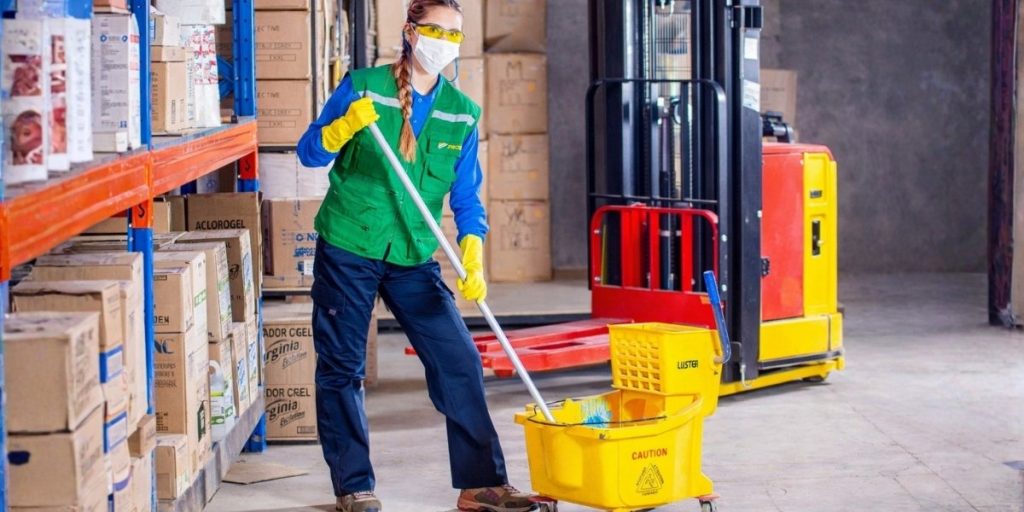
They should match PPE to the hazards, not default to a single set. Common requirements include safety shoes with slip resistant soles, high visibility clothing, gloves appropriate to chemicals, and eye protection.
In dusty tasks, they may need respirators with fit testing where required. Hearing protection can apply near active operations. If they use powered equipment, they should also consider bump caps or hard hats based on overhead risks.
How should chemicals and hazardous substances be managed?
They should follow a hazard communication program that includes labeled containers, accessible SDS, controlled dilution, and safe storage away from incompatible materials. They should never decant into unmarked bottles, even for short shifts, in line with safe handling of hazardous chemicals and SDS requirements to ensure proper identification and risk control of cleaning substances.
They should also confirm which products are permitted in that warehouse, especially in food and pharma settings where certain disinfectants, fragrances, or residues are not acceptable.
What requirements apply to floor cleaning and slip prevention?
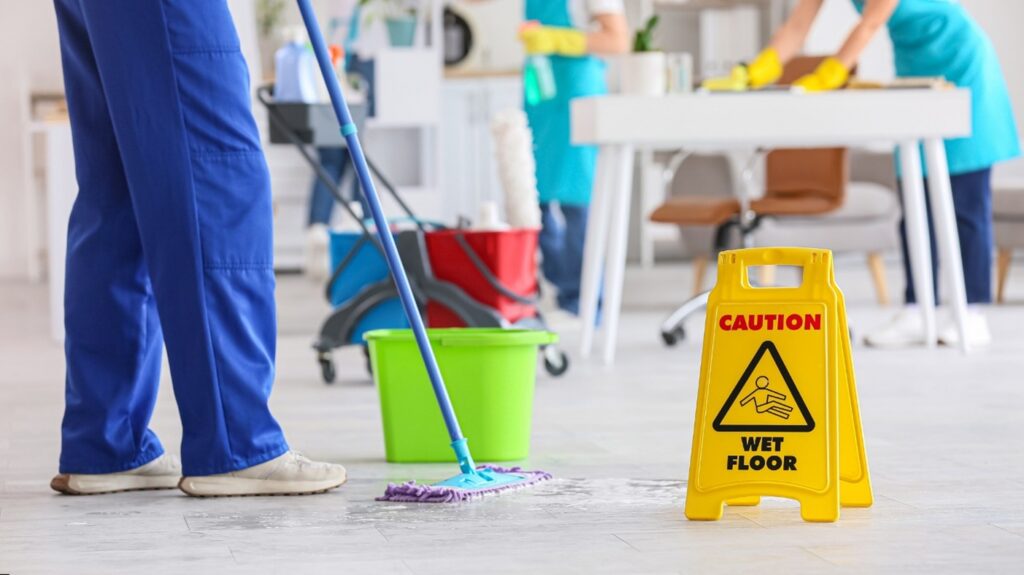
They should use methods that control wet floors, including signage, barriers, staged cleaning, and quick drying equipment. They should also select detergents that do not leave slippery residues.
If grease, oil, or rubber marks are common, they should document the approach for degreasing and post clean verification. Some sites also require slip resistance testing or periodic floor condition checks.
How should traffic management and isolation be handled during cleaning?
They should coordinate cleaning windows with warehouse operations so cleaners are not working in live forklift aisles without protection. The safest setups include temporary isolation, cones, barriers, and designated pedestrian routes.
If cleaning must happen during operations, they should use spotters or supervisors and follow a written traffic plan agreed with the warehouse manager.
What rules apply to working at height in a warehouse?
They should avoid ladders for extended tasks and use appropriate access equipment like mobile platforms or MEWPs where needed. They should inspect access equipment before use and follow fall prevention requirements, including guardrails and harness systems when applicable.
They should also control the area below to prevent people walking under the work zone, especially near racking and pick faces.
How do dust control and air quality requirements affect cleaning?
They should control dust using industrial vacuums with appropriate filtration, often HEPA for fine particulates, rather than dry sweeping. Dry sweeping can re suspend dust and create both respiratory and fire risks.
If the warehouse has sensitive goods or automation, they should also consider how dust migrates to sensors, belts, and charging areas, and schedule deeper cleans before dust loads become a maintenance issue.
What fire safety and emergency requirements should a cleaning service follow?
They should keep exits, extinguishers, alarms, and fire panels unobstructed at all times. They should also avoid storing chemicals or waste near ignition sources, chargers, or electrical rooms.
They should know the site’s evacuation routes, muster points, and alarm sounds, and their method statement should include what happens during an evacuation mid task.
What waste disposal and environmental compliance issues come up most often?
They should dispose of waste based on what it is, not just where it was found. Oily rags, chemical containers, absorbents, and contaminated wash water may need special handling and documented disposal routes.
They should also prevent wash water from entering storm drains unless the site permits it. In some warehouses, drain access and discharge procedures are tightly controlled, especially where chemicals or food residues are involved.
How should audits and compliance checks be run with a cleaning contractor?
They should expect periodic inspections of PPE use, chemical storage, signage, and task execution. The warehouse should also review near miss reports, toolbox talks, and corrective actions when issues are spotted.
A practical approach is a monthly review: what was cleaned, what incidents occurred, what hazards changed, and what will be improved. Good contractors treat audits as normal operations, not as a surprise. See retail store cleaning and customer experience standards for how cleanliness directly impacts presentation, safety, and customer perception in retail environments.
What should they look for when choosing a warehouse cleaning provider?
They should choose a provider that can explain their safety system clearly and show evidence, not just promises. The right provider can share site specific risk assessments, training records, chemical controls, and examples of how they handle traffic, heights, and dust.
They should also confirm the provider can work around operations without disrupting pick rates, while still enforcing safe isolations. If a contractor says they can clean anything at any time with no restrictions, that is usually a warning sign.
FAQs (Frequently Asked Questions)
What laws and regulations govern warehouse cleaning services?
Warehouse cleaning services typically fall under workplace health and safety laws, including OSHA-style requirements, hazard communication, PPE rules, and training obligations. They must also comply with local fire codes, environmental waste disposal regulations, client-specific site standards, and any landlord requirements if the warehouse is leased.
Which site hazards should cleaning providers assess before starting work in a warehouse?
Cleaning providers should conduct a site-specific risk assessment covering traffic routes, powered industrial trucks, racking, mezzanines, dock edges, conveyors, charging stations, restricted zones, floor conditions, drainage, lighting, and spill history. For warehouses handling powders or chemicals, dust and flammability risks must be evaluated early to determine if explosive dust controls are necessary.
What training and competencies are essential for warehouse cleaning staff?
Warehouse cleaning staff must be trained on site induction rules, emergency procedures, chemical handling, spill response, manual handling, safe equipment use, work at height protocols (if applicable), and traffic management when working near forklifts. Competency in these areas ensures effective cleaning while maintaining safety compliance.
What personal protective equipment (PPE) is commonly required for warehouse cleaning tasks?
PPE should be tailored to specific hazards but generally includes safety shoes with slip-resistant soles, high visibility clothing, gloves appropriate for chemical exposure, eye protection, respirators with fit testing for dusty tasks, hearing protection near active operations, and bump caps or hard hats when using powered equipment or working near overhead risks.
How should chemicals and hazardous substances be managed during warehouse cleaning?
Chemicals must be managed following a hazard communication program that includes labeled containers, accessible Safety Data Sheets (SDS), controlled dilution processes, and safe storage away from incompatible materials. Decanting into unmarked bottles is prohibited. Additionally, only approved products should be used in sensitive environments such as food or pharmaceutical warehouses.
What are best practices for traffic management and isolation during warehouse cleaning operations?
Cleaning activities should be coordinated with warehouse operations to avoid cleaners working in live forklift aisles without protection. Best practices include temporary isolation using cones and barriers, designated pedestrian routes, use of spotters or supervisors during active operations, and adherence to a written traffic plan agreed upon with the warehouse manager to ensure safety for all personnel.